Ambient Lighting Kits
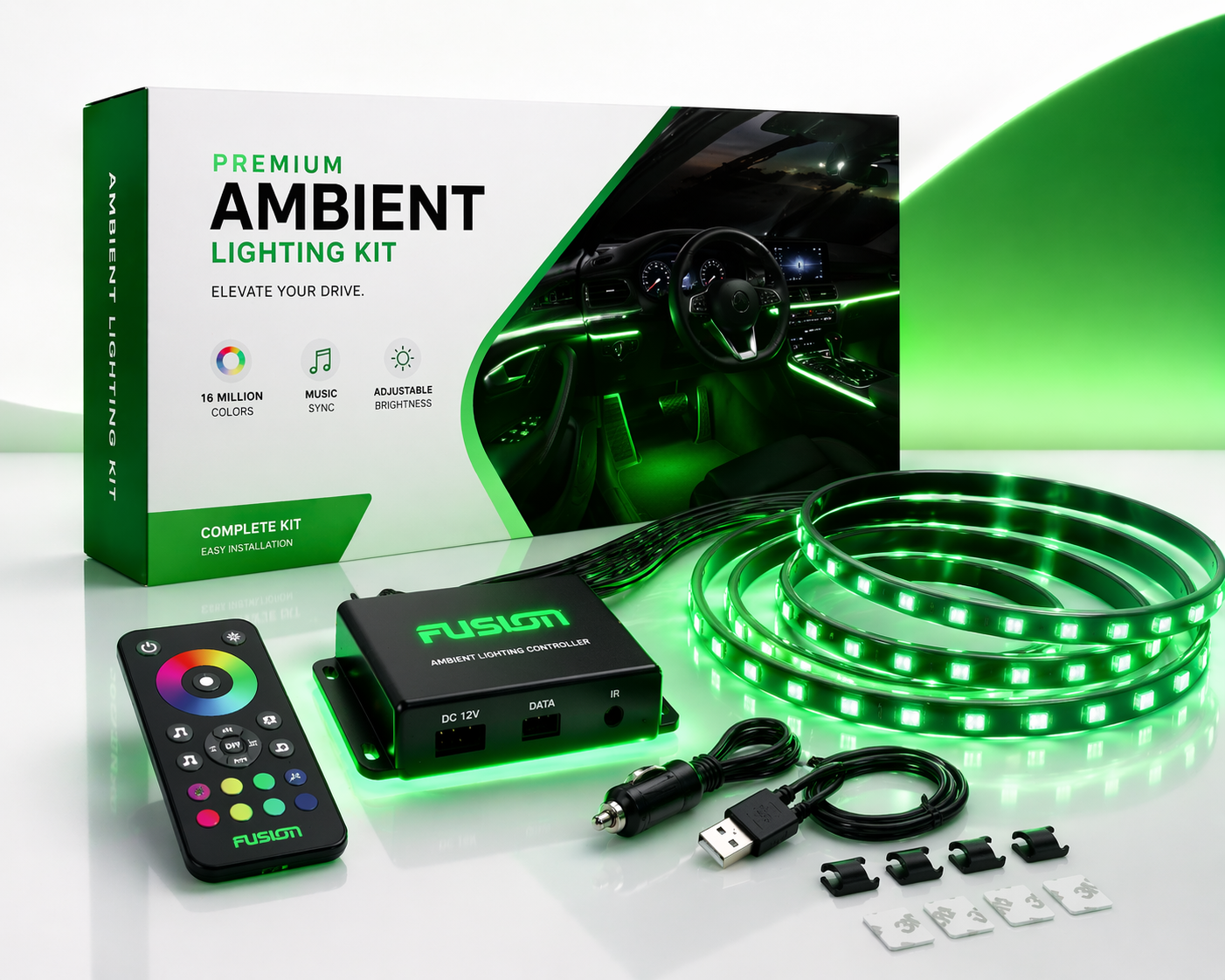
Add a luxury touch to your car interior with customizable LED ambient lighting.
Free Shipping on Orders Over $50 | Order Before 5:00 PM for Same-Day Dispatch
Add a luxury touch to your car interior with customizable LED ambient lighting.
Factory car audio usually falls short in the same two places - weak clarity and flat volume. If you're thinking about adding speakers to car without amp, the good news is that it can absolutely improve your daily drive. The catch is that the result depends on your head unit power, the speakers you choose, and how realistic you are about the kind of sound upgrade you want.
For a lot of drivers, this route makes sense. You want cleaner vocals, better detail, and a more premium feel in the cabin, but you do not necessarily want a full custom audio build. Maybe you stream music on your commute, take calls through CarPlay, or just want your system to sound less dull without taking up trunk space or stretching the budget. In that case, replacing speakers without adding an amplifier can be a smart, clean upgrade.
Yes, in many vehicles it is. A speaker upgrade alone can make factory audio sound sharper and more controlled, especially if the stock speakers are paper-cone units built for cost rather than performance. Better aftermarket speakers often handle mids and highs with more precision, so voices sound more natural and instruments feel less compressed.
That said, speakers do not create power on their own. If your car stereo or factory radio sends limited wattage, your new speakers will still be working with limited wattage. That means you can get better sound quality, but not always dramatically more volume. If your goal is strong bass, higher output, or a system that stays clean when turned up, an amp eventually becomes part of the conversation.
The biggest mistake people make is expecting premium speaker sound from budget power. The better approach is to match the upgrade to the result you actually want. If you want a cleaner everyday listening experience, adding speakers without an amp can be enough. If you want impact and headroom, it is more of a first step than a final setup.
Most factory speakers struggle with detail. At lower volume, they can sound thin. At higher volume, they often get harsh or muddy. Swapping them for quality aftermarket speakers can improve balance across the cabin even if you keep the factory head unit.
You will usually notice clearer vocals first. Podcasts, navigation prompts, and hands-free calls become easier to understand. Music can sound more open too, with less distortion in the upper range. If your vehicle has worn-out stock speakers, the difference can feel immediate.
Bass is where expectations need to stay realistic. Some replacement speakers offer tighter midbass than factory units, but they are not a substitute for a dedicated powered setup. Door speakers can only do so much when the source power is limited and the doors themselves are not treated for sound control.
When adding speakers to car without amp, speaker matching is everything. Not every aftermarket speaker is a good fit for factory power. Some speakers are designed to shine with extra amplification, and when they are connected to a basic factory stereo, they can sound underwhelming.
Sensitivity is one of the most important specs here. A speaker with higher sensitivity can produce more output from the same amount of power. That makes it a better choice if you are not installing an amp. Impedance matters too. Many factory systems are designed around specific loads, so choosing the wrong speaker can affect performance or compatibility.
Material quality also plays a role. Better cones, surrounds, and tweeters can improve durability and sound character, but only if the overall speaker design suits your vehicle. This is where professional fitting has real value. A speaker that looks great on paper can still disappoint if it is poorly matched to the car or installed with weak mounting support.
For many drivers, coaxial speakers are the practical move. They combine the woofer and tweeter into one unit, making installation simpler and often more cost-effective. In a factory-powered system, a well-chosen coaxial set can deliver a noticeable upgrade with less complexity.
Component speakers can sound better, especially in front doors, because the tweeters can be positioned separately for improved staging and detail. But they also need more careful tuning and installation. Without enough clean power, some component sets will not perform at their best.
So which is better? It depends on the car and the goal. If you want a straightforward improvement with minimal changes, coaxials are often the better fit. If you want a more refined front soundstage and are open to a more tailored installation, components can still work well without an amp - but only if the set is chosen carefully.
A lot of people focus on the speakers and forget the source. Your head unit, whether factory or aftermarket, determines how much usable power reaches the speakers. Many factory radios provide modest real-world output. That is enough for casual listening, but it caps what even good speakers can deliver.
If your car already has an upgraded infotainment screen or an aftermarket stereo with better built-in power, the results from new speakers may be stronger than expected. If you are using a very basic stock system, the improvement may lean more toward clarity than volume.
This is why speaker upgrades should be planned as part of the full in-car experience. Better sound does not come from one part alone. It comes from how the head unit, speaker choice, installation quality, and tuning work together.
Even the right speakers can sound average if they are installed poorly. Loose mounting, weak adapters, bad polarity, or gaps around the speaker can all reduce performance. In door-mounted applications, a poor seal can kill midbass and make the system sound thin.
A clean installation improves more than reliability. It helps the speaker perform the way it was designed to. Proper mounting rings, secure connections, and attention to the door structure can tighten the sound and reduce unwanted vibration. In many cases, sound deadening around the speaker area adds more value than people expect.
This is one reason many car owners prefer a professional install. It saves time, avoids guesswork, and gives you an upgrade that feels integrated rather than improvised. For drivers who want a modern, premium cabin experience, clean fitment matters just as much as the product itself.
This setup works best for drivers who want better everyday audio, not a competition-style system. If most of your listening happens during commuting, errands, school runs, or weekend trips, a speaker-only upgrade can be a strong value move. It gives the car a fresher, more polished sound without adding much complexity.
It also suits vehicles where you want to preserve space, keep weight down, or avoid more extensive electrical work. Some drivers simply want a cleaner install with fewer components. Others plan to upgrade in stages - speakers first, amplifier later.
That staged approach can be smart if the speaker choice leaves room to grow. You improve the sound now, then unlock more performance later when you are ready for an amp.
If you like listening loud, want stronger bass response, or notice that your system gets strained at higher volume, an amplifier is usually worth the investment. It gives the speakers more controlled power, which often means cleaner playback, better dynamics, and less distortion.
An amp also helps if you are choosing higher-end speakers. Premium speakers often reveal their strengths only when they have enough power behind them. Without that support, you may pay for performance you cannot fully hear.
For some vehicles, the best answer is not choosing between speakers or amp. It is choosing the right order. Start with speakers if your factory units are poor and your budget is focused on immediate improvement. Start with a broader system plan if your goal is a bigger transformation.
If you are considering adding speakers to car without amp, the smartest move is to build around your real habits. Think about what bothers you now. Is it muddy sound, weak calls, dull vocals, or lack of clarity on the highway? If those are the issues, quality speakers and proper installation may solve most of the problem.
If what you really want is stronger low-end punch and more volume without strain, speakers alone may leave you wanting more. There is nothing wrong with a simple upgrade, but it should be the right simple upgrade.
At Sahari Auto Accessories, this is exactly where a properly matched setup matters. The best results come from choosing products that work with your vehicle, your listening style, and the level of finish you expect from a professional in-car upgrade. Better sound should feel immediate, not complicated.
A good audio upgrade does not have to start with a full system rebuild. Sometimes the right speakers, fitted the right way, are enough to make every drive sound cleaner, smarter, and far more enjoyable.